
What is LAMP stack?
Issue #26 - Linux, Apache, MySQL and PHP

Introduction:
Similar to ideology as MERN stack, LAMP is also a combination of programming languages used to develop websites and web apps.
Here the combination is Linux, Apache, MySQL and PHP. It is to be kept in mind that LAMP is solely designed for raw and ultra-high performance. It is not so heavy on UI and beautiful visual effects. This is why it finds applications in sites where performance and speed of processing and result delivery to the end-user take priority. However, sites made on LAMP can facilitate the development of other websites with a great user interface (sometimes better than MERN), but LAMP websites themselves are not too high on beautification
So, to simplify, MERN for beautiful sites, but LAMP for very high performance and to facilitate the development of beautiful sites.
Components:
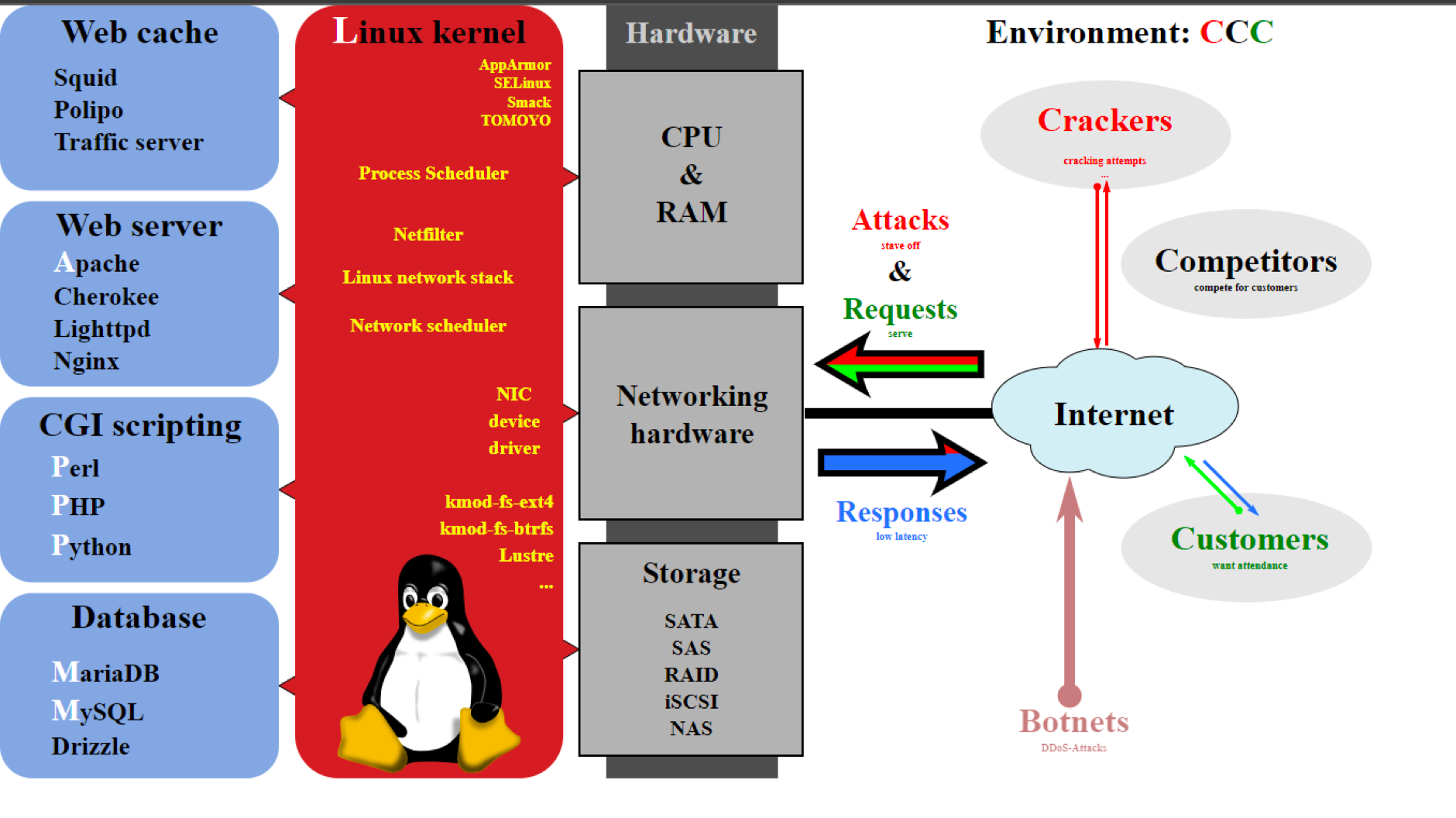
· Linux: The operating system. Linux is a free and open-source operating system (OS) that has been around since the mid-1990s. Today, it has an extensive worldwide user base that extends across industries. Linux is popular in part because it offers more flexibility and configuration options than some other operating systems.
· Apache: The web server. The Apache web server processes requests and serves up web assets via HTTP so that the application is accessible to anyone in the public domain over a simple web URL. Developed and maintained by an open community, Apache is a mature, feature-rich server that runs a large share of the websites currently on the internet.
· MySQL: The database. MySQL is an open source relational database management system for storing application data. With My SQL, you can store all your information in a format that is easily queried with the SQL language. SQL is a great choice if you are dealing with a business domain that is well structured, and you want to translate that structure into the backend. MySQL is suitable for running even large and complex sites.
· PHP: The programming language. The PHP open-source scripting language works with Apache to help you create dynamic web pages. You cannot use HTML to perform dynamic processes such as pulling data out of a database. To provide this type of functionality, you simply drop PHP code into the parts of a page that you want to be dynamic.
Conclusion:
A casual study on all of the above tells us that all of the above are individually the best-in-class tool for raw performance only. This makes LAMP websites and web apps very efficient and allows for a high degree of flexibility if having a very beautiful UI on the website is not the first priority.
That’s it for today folks!
Signing off!
Onwards and Upwards!